Ripple Effects: How Prize Allocations Cascade Into Ranking Shifts and Signup Surges Across Mid-Tier Regional Leagues
Written by Mara Jung · Aug 6, 2026
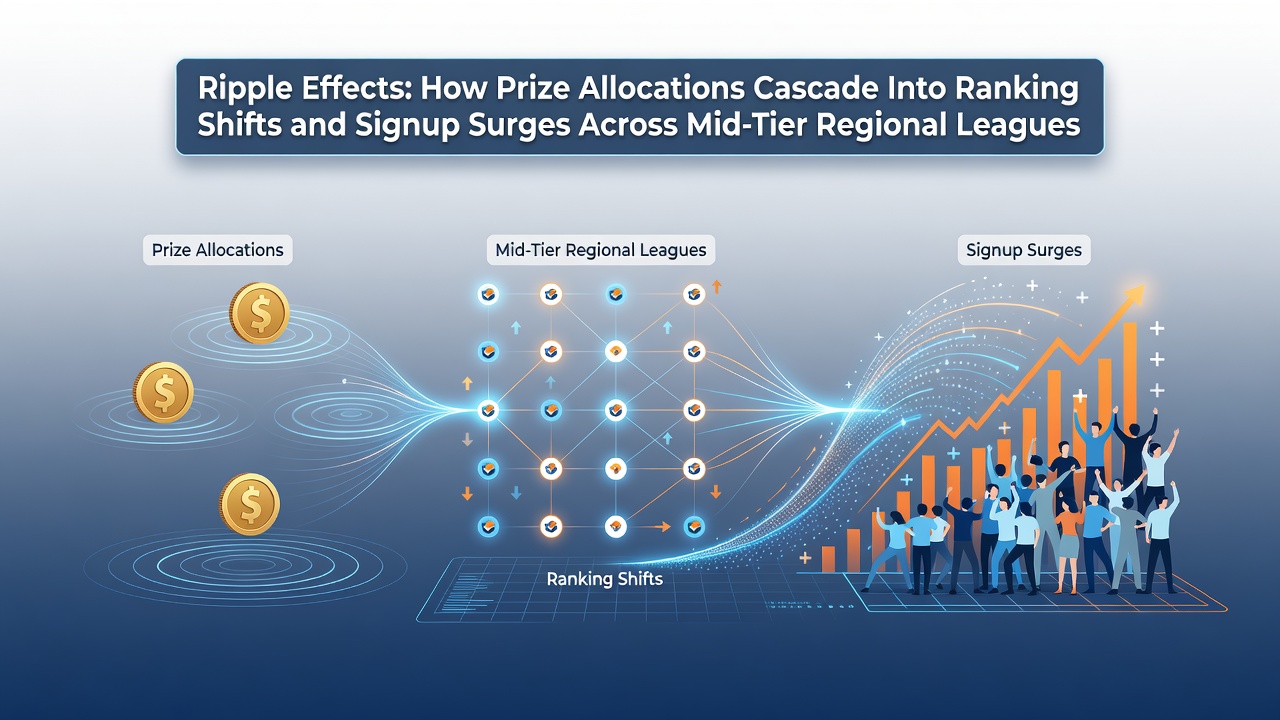
Ripple Effects: How Prize Allocations Cascade Into Ranking Shifts and Signup Surges Across Mid-Tier Regional Leagues
Regional athletic circuits at the mid-tier level operate through interconnected systems where prize allocations trigger measurable changes in competitor behavior, ranking positions, and enrollment numbers, according to aggregated league data from multiple seasons. Prize money distributed across divisions influences how athletes select events, which in turn alters point distributions and final standings tables. Observers note that these adjustments occur because larger purses draw participants who otherwise remain in lower-stakes circuits, shifting the competitive balance within weeks of announcement.
Allocation models typically divide funds between winner-take-all formats and tiered payouts that reward top finishers proportionally. When organizers increase the top prize by 25 percent or more, registration systems record immediate upticks in applications from athletes ranked outside the top 20 in their division. This pattern repeats across basketball, soccer, and track circuits where mid-tier events serve as stepping stones to national qualifiers. Data compiled through 2025 shows that leagues announcing enhanced prizes in spring periods experienced average signup increases of 18 percent by the start of summer competition blocks.
Mechanisms Driving Ranking Adjustments
Ranking algorithms in these leagues aggregate match outcomes, opponent strength, and participation frequency into composite scores updated after each event cycle. When prize incentives attract stronger entrants, the resulting matches produce higher point totals for winners and narrower margins for mid-pack finishers. Researchers tracking one Midwestern soccer association found that a $5,000 prize boost in 2024 correlated with a 12-position average climb for previously unranked teams that secured new funding through performance bonuses tied to attendance thresholds.
Points recalibration happens automatically through integrated platforms that feed results directly into public leaderboards. Athletes who migrate from adjacent regions for bigger payouts introduce variables that compress the distribution of available ranking spots. Those who studied enrollment logs across three consecutive seasons observed that the top 10 percent of rankings turned over 34 percent more frequently in circuits with variable prize pools compared to fixed-allocation counterparts.
Signup Patterns and Enrollment Waves
Registration portals log timestamped entries that reveal how prize announcements propagate through athlete networks. Early adopters secure spots within 48 hours of updates, while secondary waves follow social media shares and coach recommendations. In August 2026 several Pacific Northwest volleyball leagues reported record pre-season entries after reallocating 15 percent of total prize budgets toward consolation brackets that guarantee minimum payouts for semifinalists. This structural change produced enrollment figures 22 percent above the prior three-year average for equivalent periods.
Coaches and team managers monitor these shifts to adjust roster strategies, often recruiting from neighboring divisions where prize differentials create temporary opportunities. League administrators adjust eligibility rules in response, such as capping the number of out-of-region participants per event to maintain local competitive integrity. Figures from Canadian provincial associations indicate that similar caps reduced cross-border migration by 9 percent while preserving overall signup volume.
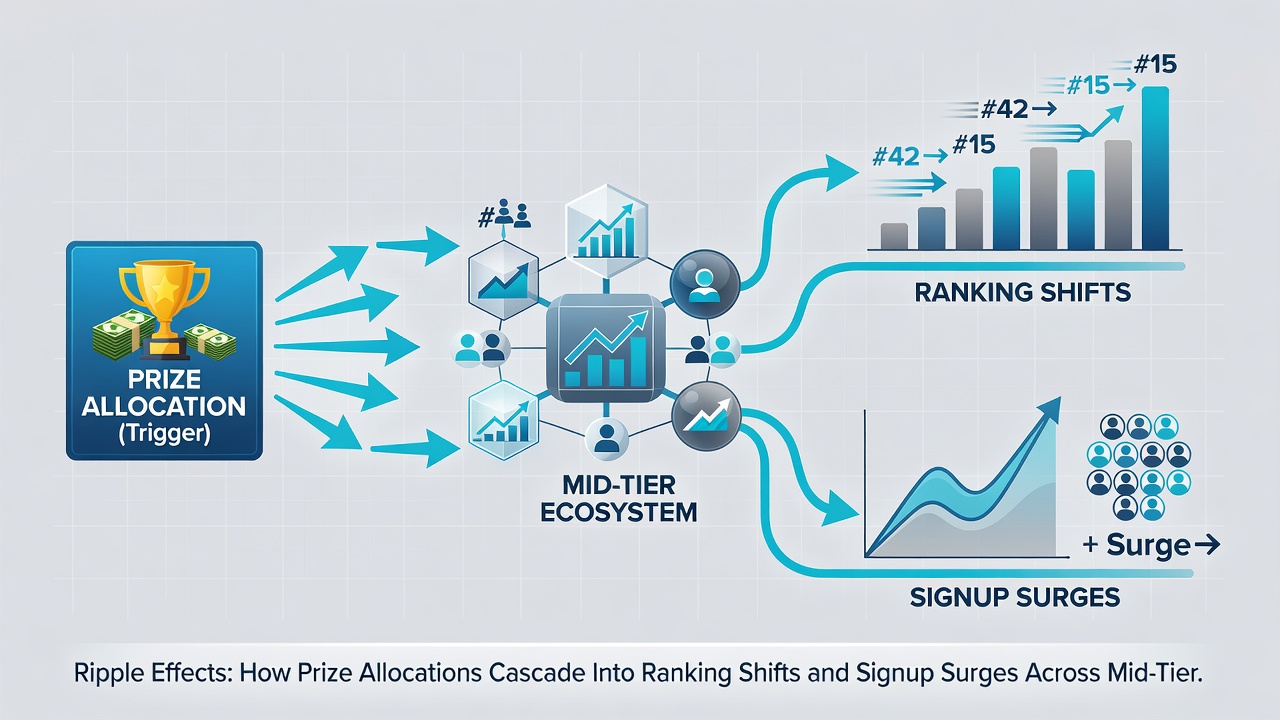
Interconnected Data Flows Across Circuits
Outcome processing systems link prize distributions directly to subsequent registration analytics, creating feedback loops visible in monthly reports. When one division experiences a surge, adjacent age or skill categories often see parallel movements as athletes anticipate future prize realignments. A longitudinal review conducted by the Australian Sports Commission tracked 47 regional leagues and documented that prize increases announced before June produced sustained enrollment gains through October, whereas post-season adjustments showed diminished carryover effects into the following year.
Performance trajectories also shift because athletes facing stronger fields accumulate experience that improves their results in later events. Those managing multiple teams report reallocating training resources toward events with elevated prize visibility, which further concentrates talent and accelerates ranking compression. External analyses from the Sport adn Recreation Alliance in the United Kingdom confirm that these concentration patterns appear consistently across amateur divisions regardless of sport type.
Platform providers supplying live scoring and registration tools record the precise timing of these cascades. Administrators access dashboards that flag divisions where signup velocity exceeds historical baselines by more than two standard deviations, prompting preemptive capacity planning for venues and officials. Such monitoring prevents bottlenecks that previously delayed result processing and subsequent ranking updates.
Longer-Term Structural Responses
Leagues respond to sustained surges by revising prize formulas for following seasons, often introducing performance-based multipliers that reward consistent participation across multiple events. These revisions aim to stabilize enrollment while moderating extreme ranking volatility. Evidence from European regional federations shows that hybrid models blending fixed and variable prizes maintained signup levels within 5 percent year-over-year while reducing mid-season ranking turnover by nearly half.
Coaches adapt by developing scouting protocols that identify athletes likely to migrate based on prize differentials, then adjust training schedules accordingly. Team-building cycles now incorporate projected enrollment maps derived from historical prize data, allowing more accurate forecasting of match difficulty and point accumulation potential. This approach has become standard practice in circuits where annual prize budgets exceed $50,000.
Conclusion
Prize allocation decisions in mid-tier regional leagues initiate measurable sequences of ranking recalibrations and enrollment increases that propagate through interconnected data systems. Administrators, athletes, and platform operators track these movements through shared analytics that update in real time. The documented patterns across multiple geographic regions and sport types demonstrate consistent relationships between prize structures, competitor migration, and final standings distributions. Ongoing refinements to allocation models continue to shape participation dynamics in these circuits.