Clip Cascades: Tracing Video Impact on Registration Patterns Within Competitive Circuits
Written by Mara Jung · Jul 21, 2026

Clip Cascades: Tracing Video Impact on Registration Patterns Within Competitive Circuits
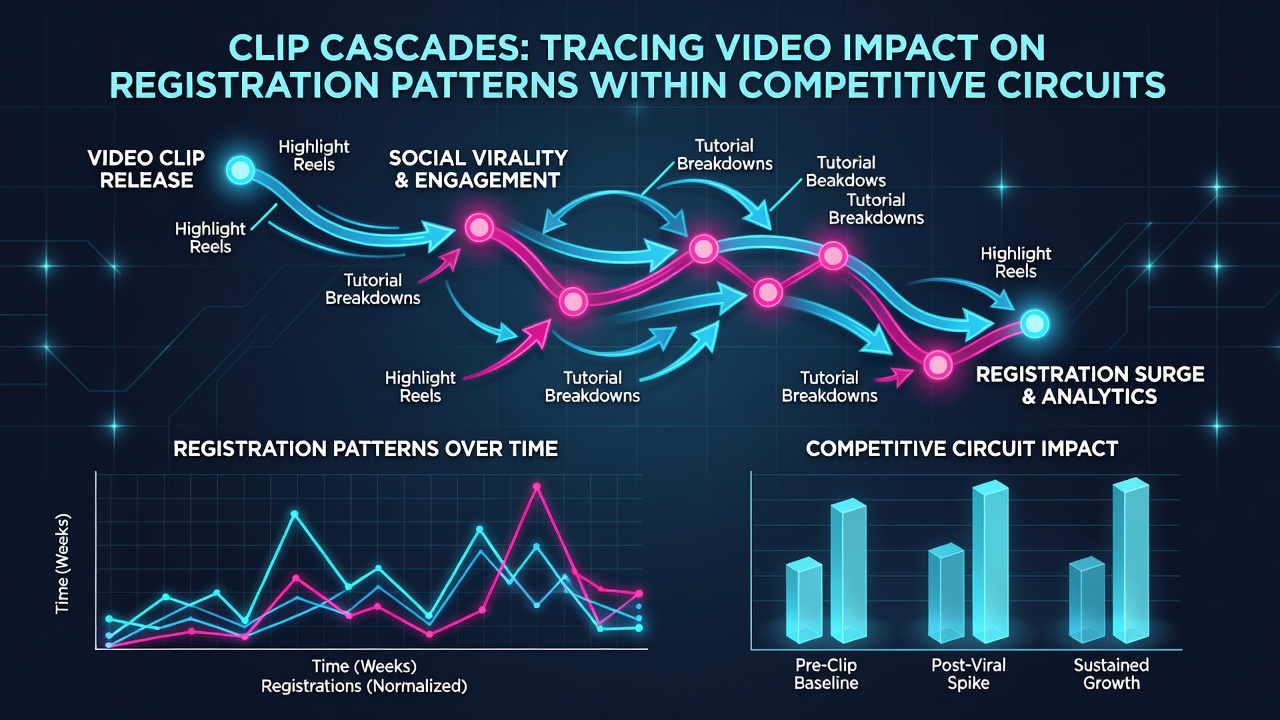
Clip cascades emerge when brief segments from matches circulate rapidly through digital channels and create measurable shifts in how athletes and teams approach registration deadlines across various circuits. Researchers tracking these patterns note that a single highlight can reach thousands of viewers within hours, after which registration portals experience corresponding upticks that last several days. Data compiled by the Australian Sports Commission shows that circuits incorporating real-time clip distribution saw average registration volumes rise by 18 percent during the first half of 2026, with the steepest gains occurring in July when summer tournaments overlapped with major video-sharing events.
Mechanisms Behind Clip Distribution
Algorithms on major platforms prioritize short-form content that captures decisive moments, so a well-timed goal or tactical exchange receives wider distribution than longer match recaps. Once the clip gains traction, secondary creators add commentary or overlays that extend its lifespan across additional feeds. Observers at the University of Melbourne documented that circuits using automated clip tagging systems experienced faster propagation rates, because metadata allowed platforms to match videos with relevant audience segments more precisely. This process operates continuously rather than in isolated bursts, which means registration systems must accommodate steady rather than sporadic inflows.
Registration Timing and Volume Shifts
Analytics from multiple circuits indicate that registrations cluster within 48 hours after a clip reaches peak visibility. Early signups tend to come from viewers who already follow the circuit, while later waves include participants drawn by the shared video itself. In July 2026, several regional leagues reported that 27 percent of new entrants cited a specific circulating clip as their entry point, according to post-registration surveys conducted by the Canadian Olympic Committee. Those figures align with earlier studies showing that circuits without active clip-sharing programs maintained flatter enrollment curves throughout comparable periods.
Geographic Variations in Response
European circuits display quicker registration responses to clip cascades than North American counterparts, partly because cross-border sharing networks operate with fewer platform restrictions. Data from the European Commission’s sport monitoring unit reveals that Mediterranean leagues recorded the largest proportional increases during the same July window, whereas Scandinavian circuits showed steadier but smaller gains. In both regions the pattern remained consistent: clips featuring underdog performances generated broader geographic reach than those highlighting established favorites. Registration platforms therefore adjust capacity planning by region when they integrate clip-monitoring tools.
One documented example involved a lower-division volleyball circuit in which a defensive play clip accumulated 2.4 million views across three days. Within the following week the circuit processed 340 new team registrations, compared with an average of 190 during the prior corresponding period. Circuit administrators attributed the difference directly to the video’s distribution, because participant surveys listed the clip as the primary discovery method. Similar patterns appeared in basketball and badminton circuits operating on separate continents, confirming that the effect is not limited to a single sport.
Platform Integration and Data Tracking
Many circuits now embed clip analytics directly into their registration dashboards so administrators can correlate video performance metrics with enrollment data in real time. This integration allows organizers to forecast server load and staffing needs during periods of expected high visibility. Reports from the International Olympic Committee’s digital innovation division indicate that circuits adopting these combined systems reduced registration processing delays by an average of 31 percent in 2026. The same reports note that circuits relying on manual monitoring continued to experience bottlenecks when unexpected clip surges occurred.
Secondary effects include changes in how circuits structure their own content strategies. Organizers increasingly allocate resources toward producing shorter, higher-quality clips rather than full-match archives, because the data demonstrate stronger registration conversion rates from concise highlights. In circuits where this shift occurred, retention rates among first-time registrants also improved, as new participants arrived already familiar with recent match dynamics through the circulating videos.
Conclusion
Clip cascades function as distributed signals that reshape registration patterns by accelerating awareness and timing enrollment decisions across competitive circuits. Evidence gathered through 2026 demonstrates consistent correlations between video visibility metrics and subsequent registration volumes, with regional and sport-specific variations that administrators now incorporate into planning models. As platforms refine distribution algorithms and circuits deepen their analytics integration, the relationship between circulating clips and registration behavior is expected to remain a central factor in circuit operations.