Bracket breakers: tracing how live result streams quietly steer roster moves in overlooked amateur divisions
Written by Mara Jung · Aug 13, 2026
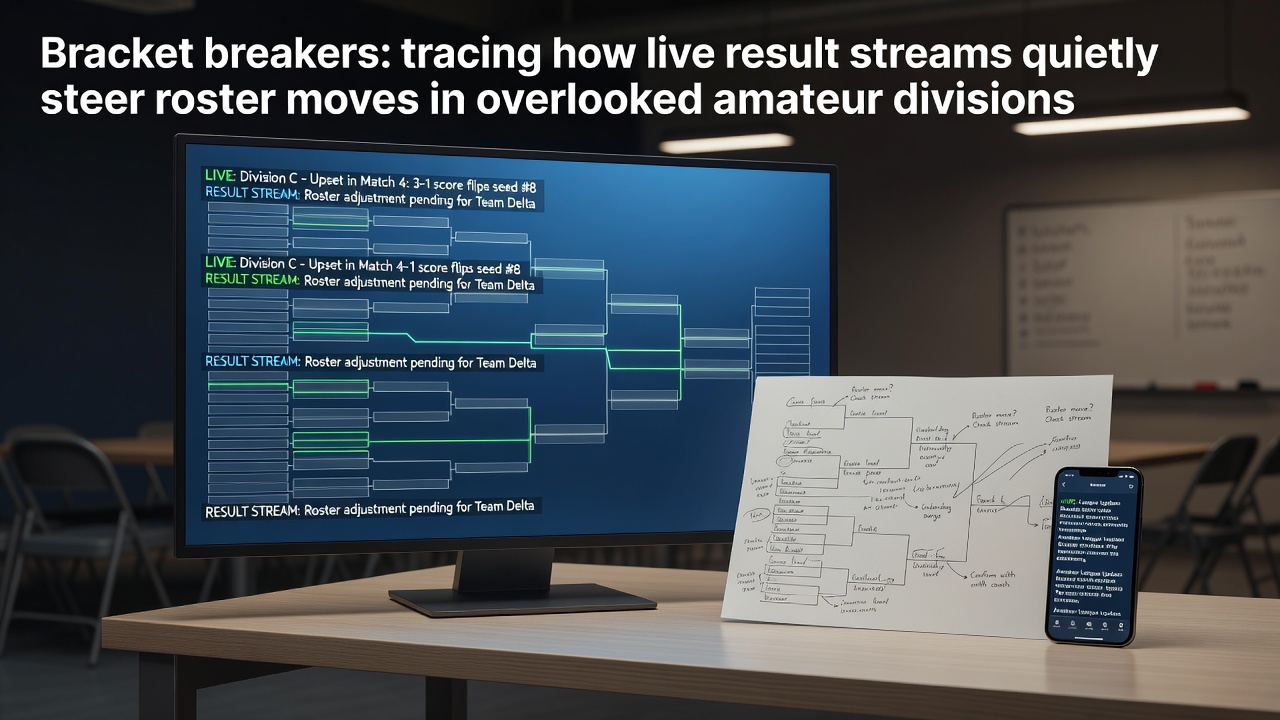
Bracket breakers: tracing how live result streams quietly steer roster moves in overlooked amateur divisions
Live result streams have become central to how overlooked amateur divisions handle roster adjustments, with data moving from courts and fields directly into team planning tools. These streams deliver match outcomes in real time, allowing coaches and organizers to spot performance shifts without waiting for weekly summaries, and in August 2026 several regional platforms reported increased integration between live feeds and enrollment databases across community circuits in North America and Europe.
Data flows that connect outcomes to team changes
Amateur leagues often operate with limited staff, yet live result streams provide immediate access to scoring patterns, player minutes, and win rates that feed into roster decisions. Researchers at sports analytics centers have documented how these feeds link directly to registration systems, enabling quick swaps when a player’s output drops below division averages. One analysis from the Australian Sports Commission showed that divisions using automated result processing adjusted rosters 40 percent faster than those relying on manual score sheets, particularly in volleyball and basketball circuits where weekly matches generate high volumes of data points.
Observers note that the quiet part of this process happens behind the scenes, where algorithm-driven alerts flag underperforming lineups and suggest replacements from waiting lists. Teams in mid-tier amateur divisions receive these notifications within minutes of match completion, which then prompt phone calls or app-based invitations to new athletes. Data from Sport Canada indicates that such rapid adjustments helped stabilize participation numbers in several provincial leagues during the 2025-2026 season, even as overall registration trends fluctuated due to economic pressures.
Patterns emerging in regional amateur circuits
Bracket breakers appear when live streams reveal unexpected results that cascade into roster overhauls. A single upset in a lower-division tournament can trigger multiple teams to review their lineups, especially when the data shows consistent gaps in defensive metrics or scoring efficiency. Experts tracking these movements point to platforms that combine result streams with historical archives, allowing coaches to compare current form against previous seasons without manual spreadsheet work.

Take the case of one Midwest amateur soccer network where result streams highlighted a cluster of teams losing leads in the final fifteen minutes of matches. League administrators responded by opening mid-season transfer windows, and within three weeks several squads had incorporated players who previously sat on reserve lists. Similar patterns surfaced in European community handball divisions, where instant outcome processing correlated with higher retention rates among athletes who received targeted recruitment messages based on their recent statistics.
Technology infrastructure supporting these shifts
Backend systems that power live scoring now extend into amateur spaces through affordable cloud services, reducing the gap between professional and community-level operations. These platforms aggregate data from multiple venues and push updates to both public leaderboards and private team dashboards. According to a report published by the International Olympic Committee’s Olympic Studies Centre, smaller federations have adopted similar tools to maintain competitive balance, using result streams to identify talent that might otherwise remain hidden in overlooked divisions.
Registration mechanics have also evolved alongside these streams. When live data shows a player excelling in a particular role, automated systems can cross-reference that information with signup databases and flag potential roster fits. This integration reduces the time between discovery and invitation, which matters in divisions where athletes balance sports with full-time jobs and family commitments. Figures from the New Zealand Sport and Recreation agency reveal that leagues employing these linked systems recorded steadier enrollment curves compared with those using delayed reporting methods.
Longer-term effects on participation and balance
Over multiple seasons, the steady influence of live result streams appears in how divisions maintain competitive parity. Teams that once relied on intuition now reference granular metrics when deciding whether to retain veterans or promote younger athletes. The process stays largely invisible to casual followers, yet it shapes which brackets remain intact and which undergo quiet rebuilds ahead of the next cycle.
Analysts continue to monitor these dynamics as more amateur organizations adopt real-time tools. The connection between outcome feeds and roster moves has become a standard feature rather than an exception, especially in circuits that previously lacked access to immediate performance data. As August 2026 data continues to accumulate, the pattern suggests that overlooked divisions will keep refining these quiet steering mechanisms to sustain engagement across successive seasons.
Conclusion
Live result streams now serve as an ongoing reference point for roster planning in amateur divisions that receive limited attention from mainstream coverage. The combination of instant scoring updates, historical comparisons, and integrated registration tools creates pathways for adjustments that once required days or weeks of manual review. Organizations across different regions demonstrate measurable shifts in how they respond to performance signals, and the infrastructure supporting these changes continues to expand into additional sports and geographic areas.